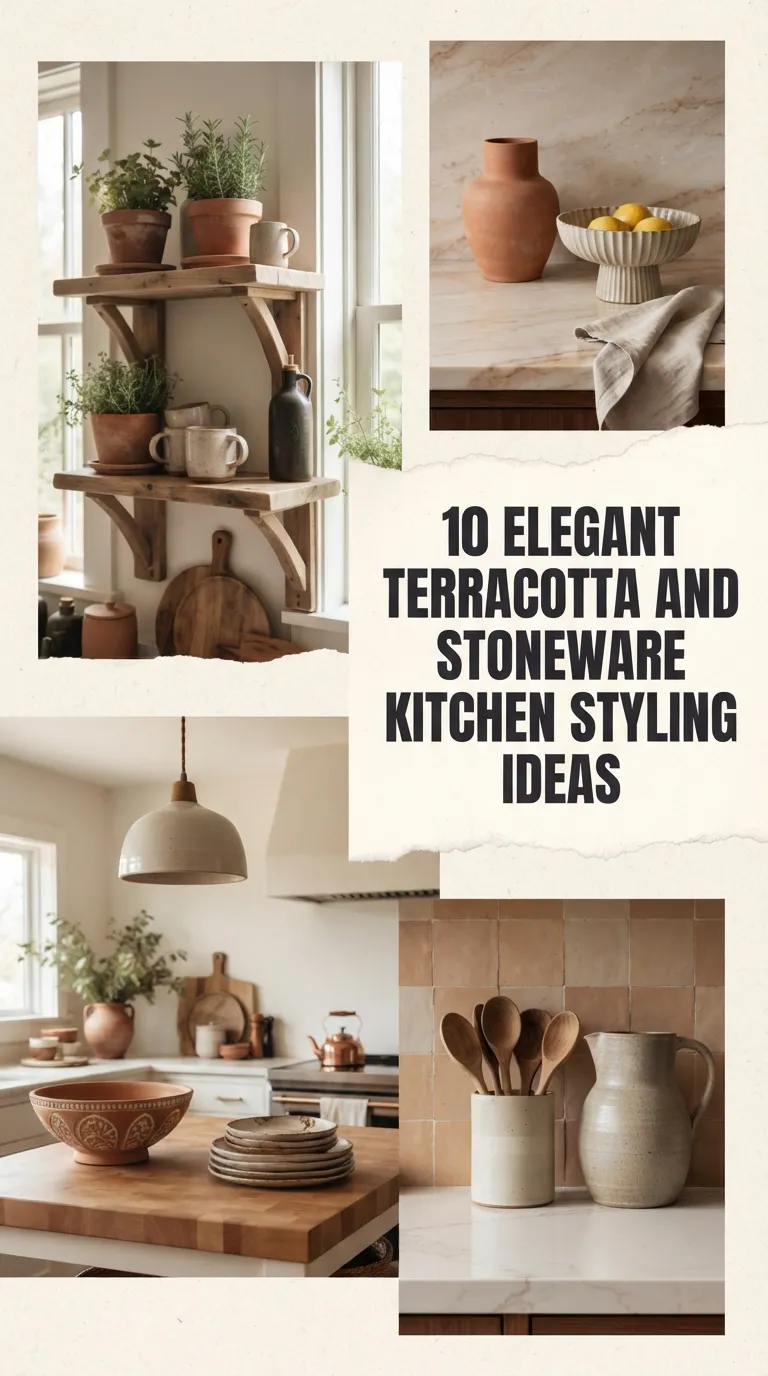
Terracotta and stoneware have shifted from historical kitchen workhorses to the centerpiece of elevated, organic interior design. Modern kitchen aesthetics have moved away from stark, sterile minimalism, embracing instead the rich warmth, grounding weight, and tactile depth of kiln-fired earth. Incorporating terracotta and stoneware allows you to introduce organic texture, timeless craftsmanship, and subtle luxury into culinary spaces of any style—from Mediterranean rustic and Belgian farmhouse to contemporary minimalist.

1. The Sculptural Open-Shelf Stack
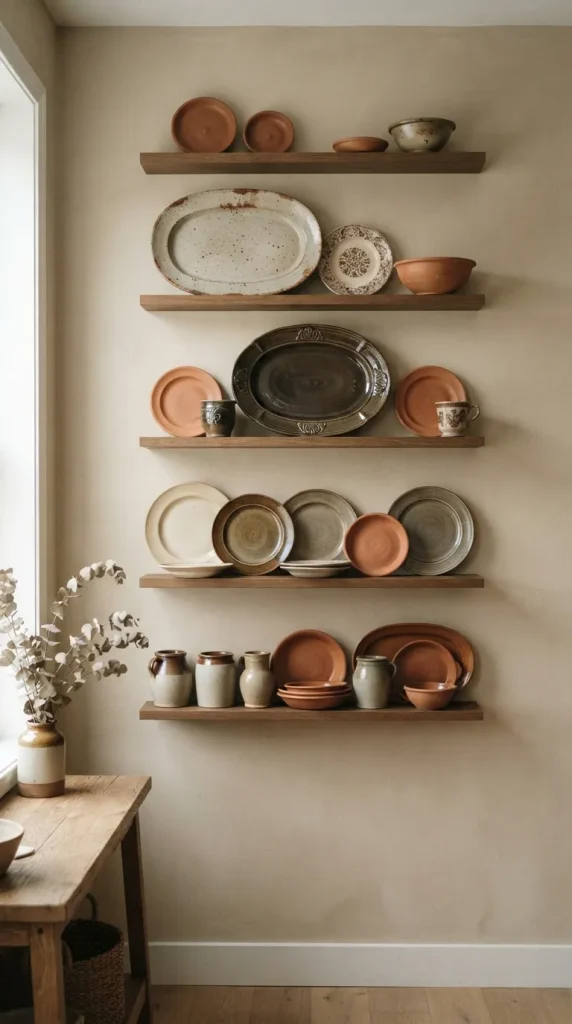
Open shelving offers the ideal stage for showcasing daily utility through artisanal form. Instead of concealing your stoneware dishes, turn them into an intentional visual installation by stacking speckled ceramic dinner plates, low-rim pasta bowls, and raw-rimmed saucers in staggered groupings.
Weave in unglazed terracotta urns or low pinch-pots between the ceramic stacks to break up monotonous glazes. The textural contrast between smooth, matte cream glazes and coarse, porous burnt-orange earthenware creates visual cadence. Pair these layered ceramics with warm white oak or floating reclaimed timber shelves set against an off-white plaster backdrop for an effortlessly curated display.

2. The Functional Countertop Crock Cluster
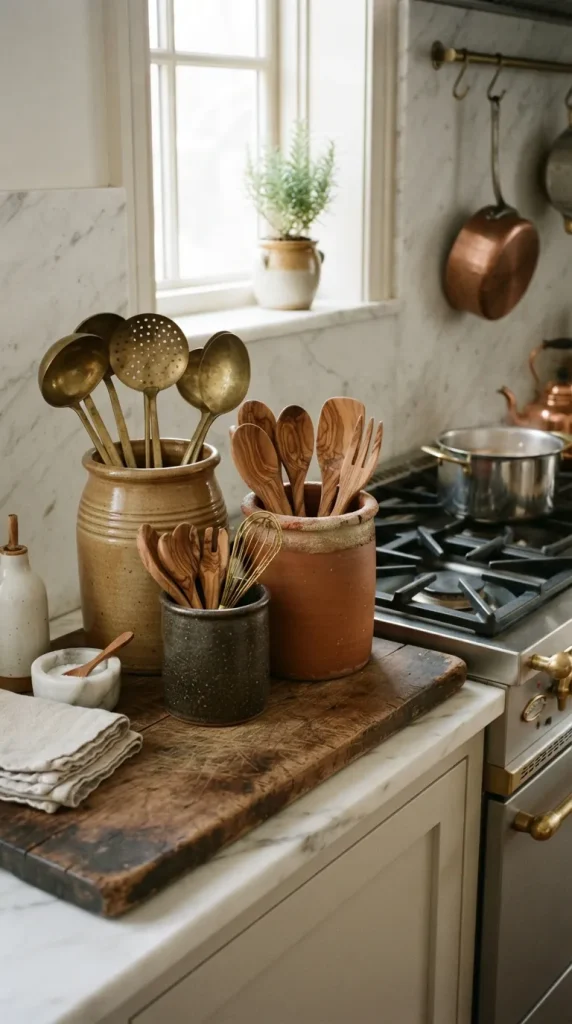
Streamline countertop organization by grouping heavy stoneware and weathered terracotta crocks beside the range. Rather than relying on a single utensil holder, arrange a trio of varying heights and diameters.
Use an oversized, unglazed terracotta vessel for long olivewood spoons and brass ladles, a medium speckled oatmeal stoneware jar for whisks and tongs, and a petite, footed pinch crock for finishing salts. Grounding the cluster on a vintage marble plinth or an aged butcher block keeps the vignette feeling intentional rather than cluttered, balancing practical accessibility with sculptural character.
3. Terracotta Pendant Lighting Over the Island
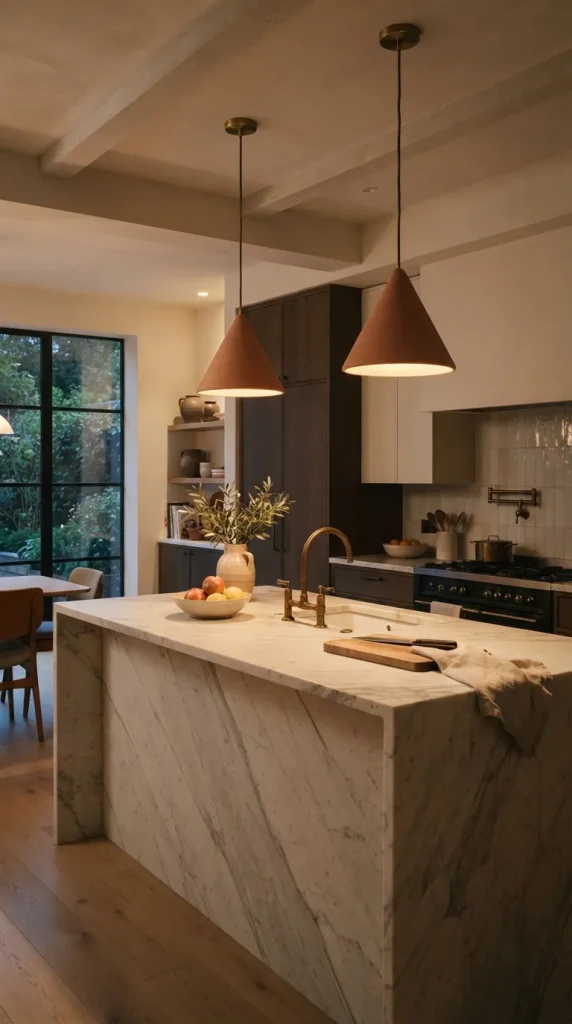
Lighting anchors a kitchen’s architecture, and terracotta pendant shades bring down-to-earth warmth overhead. Hand-thrown terracotta light fixtures—whether left in their natural porous state or finished with a subtle chalky wash—diffuse light downward while casting an amber-tinted ambient glow across kitchen islands.
Opt for clean, conical or shallow dome silhouettes suspended by twisted natural linen cords or patinated unlacquered brass hardware. The warmth of the fired clay balances sleek waterfall countertops in marble, quartzite, or poured concrete, adding a human touch to sharp architectural lines.
4. Windowsill Culinary Herb Garden in Clay Pots
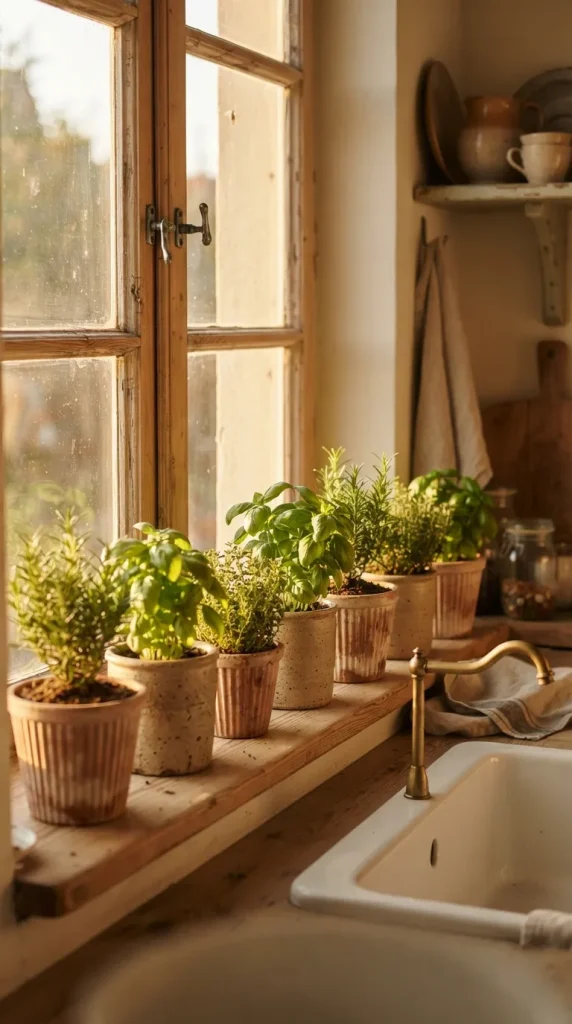
A windowsill lined with fresh herbs is a classic kitchen touch that feels instantly elevated when styled in uniform terracotta and stoneware pots. Choose pots with gentle fluting, rolled rims, or subtle drainage trays.
Plant fragrant rosemary, Greek oregano, flat-leaf parsley, and sweet basil in a mix of hand-thrown aged terracotta pots and textured greige stoneware vessels. The porous nature of natural clay keeps herb roots healthy by regulating moisture, while the vibrant green foliage sets off the rich, iron-heavy red of terracotta.
5. Handcrafted Zellige-Style Terracotta Backsplashes
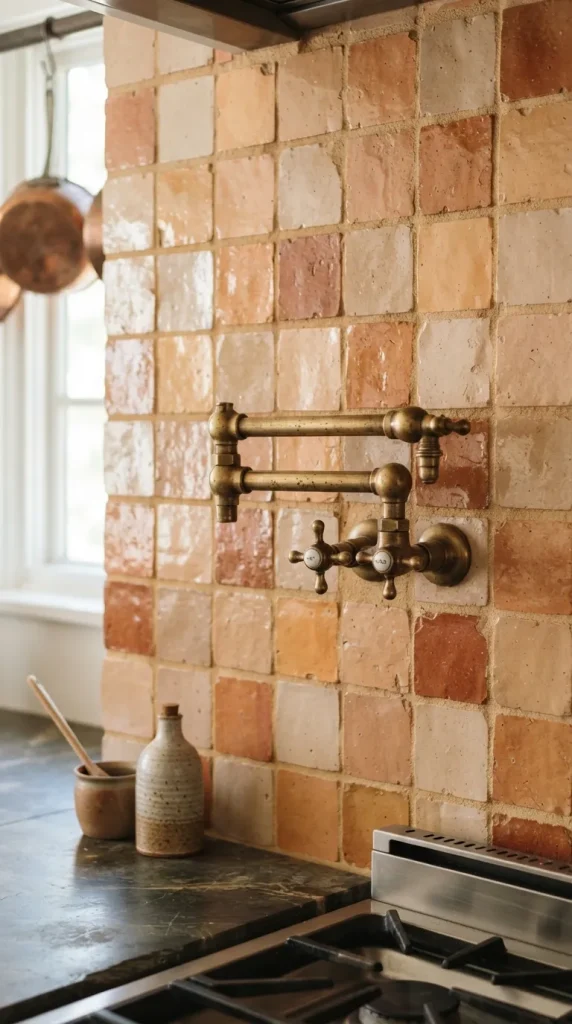
A terracotta backsplash brings deep, artisanal texture to wall surfaces. Move past traditional flat square tiles in favor of glazed or semi-glazed terracotta subway tiles, bevel-cut Moroccan zellige, or raw star-and-cross patterns.
Because authentic terracotta tiles are hand-molded and kiln-fired, every tile carries subtle variations in thickness, undulating edges, and tone—ranging from pale peach and blush to deep cinnabar. Grout them tightly with a warm sand-toned mortar to let the natural texture shine across the entire cooking zone.
6. The Gourmet Oil and Salt Prep Board
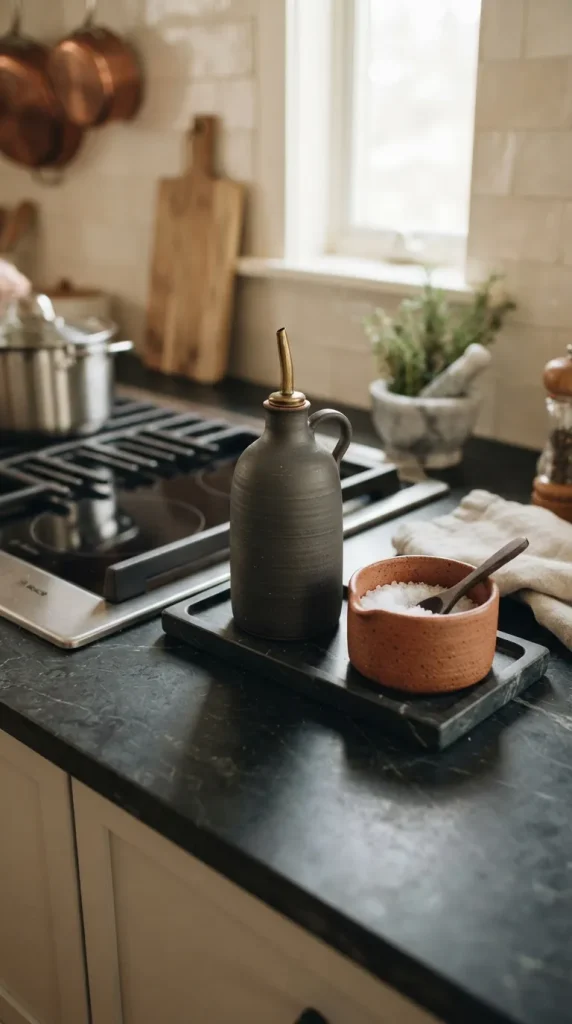
Elevate your prep zone by treating everyday seasonings as design accents. On a footed wooden board or honed soapstone slab next to your cooktop, assemble a dedicated flavor station with bespoke stoneware cruets.
Select a wheel-thrown stoneware olive oil pourer fitted with a brass spout, accompanied by a lidded terracotta garlic keeper and a wide-mouthed salt cellar filled with flaky sea salt. The natural weight of dense stoneware provides stability on busy countertops, and the earthy colors make practical tools look like quiet sculpture.
7. Oversized Statement Urns with Foraged Florals
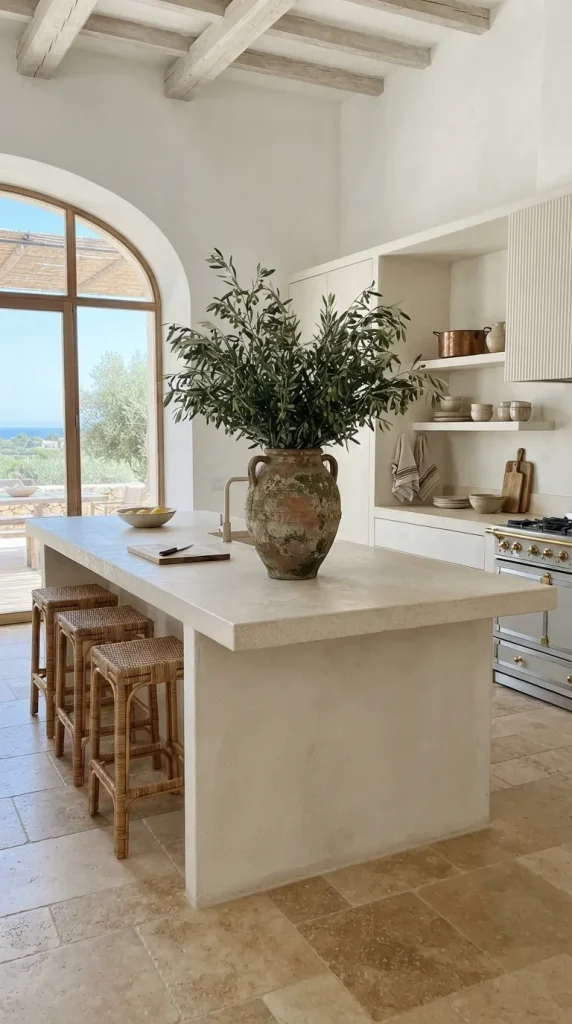
Every kitchen benefits from a dynamic focal point that breaks up hard cabinet lines. Place an oversized, amphora-style terracotta vessel or a heavy, chalky-white stoneware jar at the end of a kitchen island, on a deep windowsill, or atop an expansive range hood mantle.
Fill the vessel with seasonal greenery—such as tall olive branches, blooming quince stems, dried eucalyptus, or wild branches. The weathered surface and subtle imperfections of an antique-style urn add grounded character to newly built or renovated kitchens.
8. Earthy Dining Nook and Breakfast Bar Tablescapes
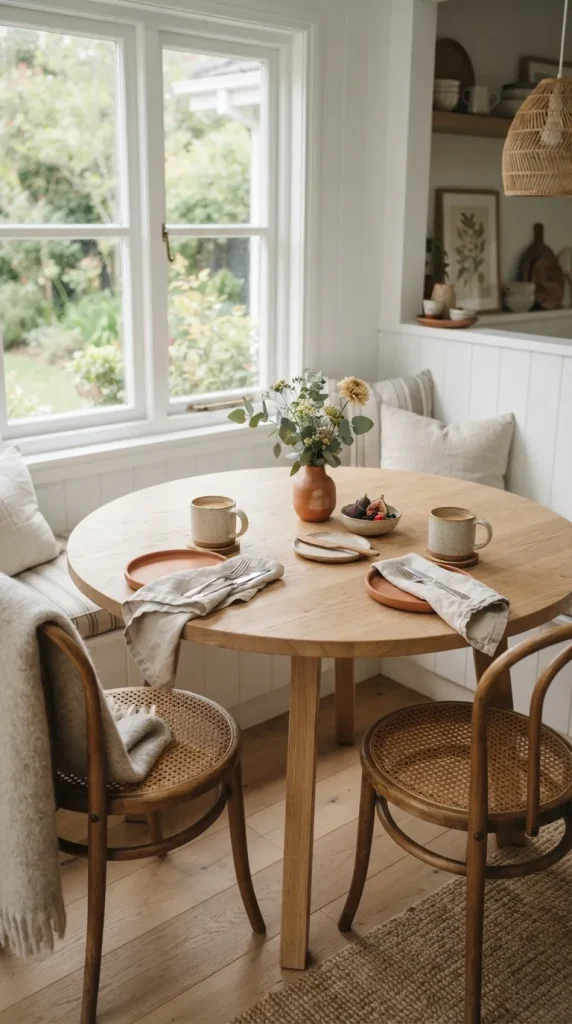
Extend the terracotta and stoneware palette directly into your dining areas. For banquette seating, breakfast corners, or casual bar dining, build tablescapes centered around organic tableware.
Layer neutral linen runners with speckled stoneware dinnerware, terracotta charger plates, and low-profile clay bud vases holding delicate dried grasses. Complete the setting with heavy, hand-cast stoneware mugs for morning coffee and ribbed terracotta water carafes, turning everyday meals into a warm, grounded ritual.
9. Terracotta Wine Coolers and Pouring Pitchers
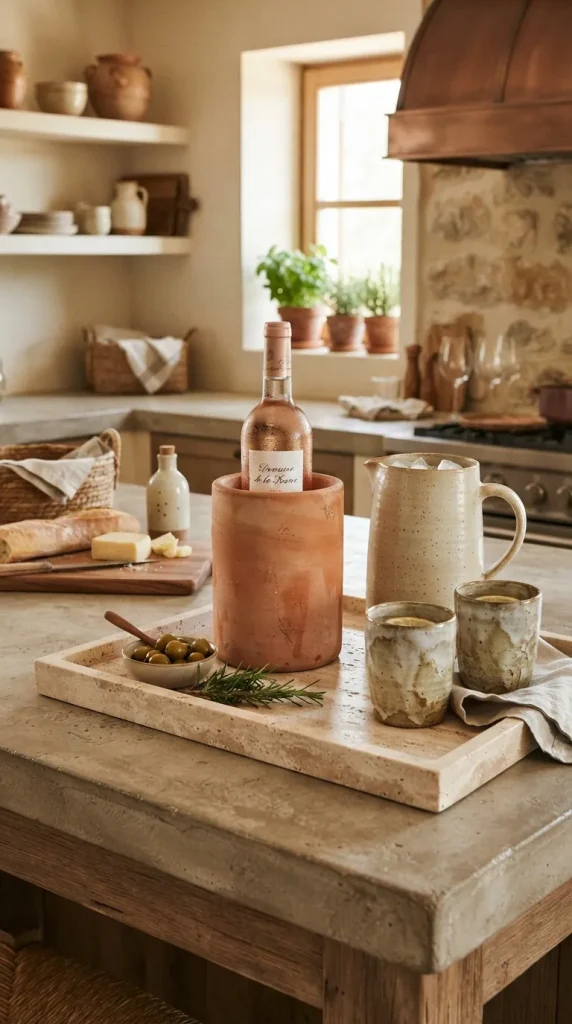
Natural terracotta possesses natural evaporative cooling properties, making it as practical for hosting as it is handsome. Soak a cylindrical terracotta wine cooler in cold water for fifteen minutes before sliding in a chilled bottle of white or rosé; the slow evaporation keeps your drink cool without melting ice.
Group the wine cooler on an entertaining cart or island tray alongside a wide-bellied stoneware sangria pitcher and a stack of low clay tumblers. This setup brings the relaxed, sun-drenched ease of an Italian or Spanish villa straight to your kitchen gatherings.
10. Wall-Mounted Display Ledges with Vintage Plates
Blank kitchen and pantry walls are often overlooked opportunities for textural design. Install slim picture ledges stained to match your cabinetry, and lean a curated collection of antique stoneware platters, handmade terracotta bread plates, and decorative ceramic bowls.
Overlap plates of contrasting shapes, scales, and finishes—placing a glossy cream-glazed ironstone charger behind a raw, unglazed terracotta saucer with a scalloped edge. This vertical styling draws the eye upward, celebrating the craft of pottery as collectible art.