Easter is a time of renewal, celebration, and gathering with family and friends. While traditional Easter tables often feature sweets, baked goods, and rich dishes, incorporating fresh vegetables can bring balance, color, and nutrition to the festivities. A creatively arranged veggie tray not only offers a healthy snack option but also doubles as a decorative centerpiece that fits perfectly with the cheerful spring theme. Below are ten inspiring Easter veggie tray ideas that are both visually appealing and delicious.

1. Easter Bunny Veggie Platter
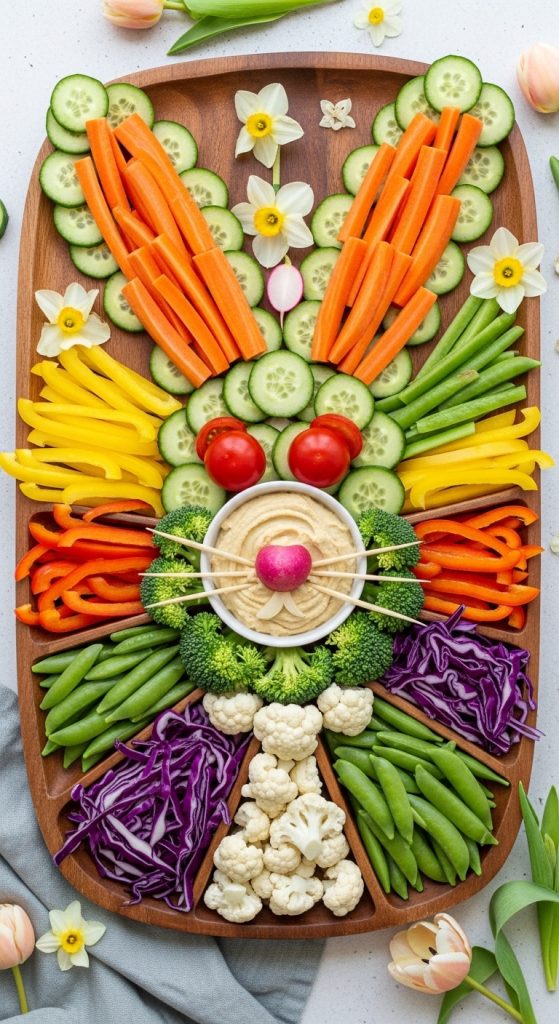
One of the most popular themed trays is a bunny-shaped veggie arrangement. Use cauliflower or a bowl of dip as the bunny’s face, and arrange sliced cucumbers, carrots, and celery as the outline of the ears and body. Add olives or cherry tomatoes for the eyes and nose. This playful design is especially great for kids and adds a whimsical touch to your table.
2. Rainbow Vegetable Tray
Celebrate the colors of spring by arranging vegetables in a rainbow pattern. Use red bell peppers, orange carrots, yellow peppers, green cucumbers, purple cabbage, and white cauliflower. Place them in arcs or rows to mimic a rainbow. Pair with a white or light-colored dip to make the colors pop even more.

3. Easter Egg-Shaped Platter
Create a large egg shape using a variety of chopped vegetables. Outline the egg with cherry tomatoes or baby carrots and fill the inside with sections of different veggies arranged in patterns or stripes. You can even use small dips in the center as decorative elements.

4. Garden-Themed Veggie Tray
Design your tray to resemble a miniature garden. Use broccoli and parsley as “trees,” cherry tomatoes as “flowers,” and cucumber slices as “leaves.” Arrange everything on a bed of shredded lettuce to mimic grass. Add a small bowl of dip in the center as a focal point.

5. Carrot Patch Veggie Tray
This idea is perfect for Easter’s association with the Easter Bunny. Use baby carrots as the main feature and group them in clusters to resemble a carrot patch. Add dips in small bowls labeled as “soil” using hummus or ranch dip. Surround the carrots with leafy greens for a natural look.

6. Deviled Egg and Veggie Combo Tray
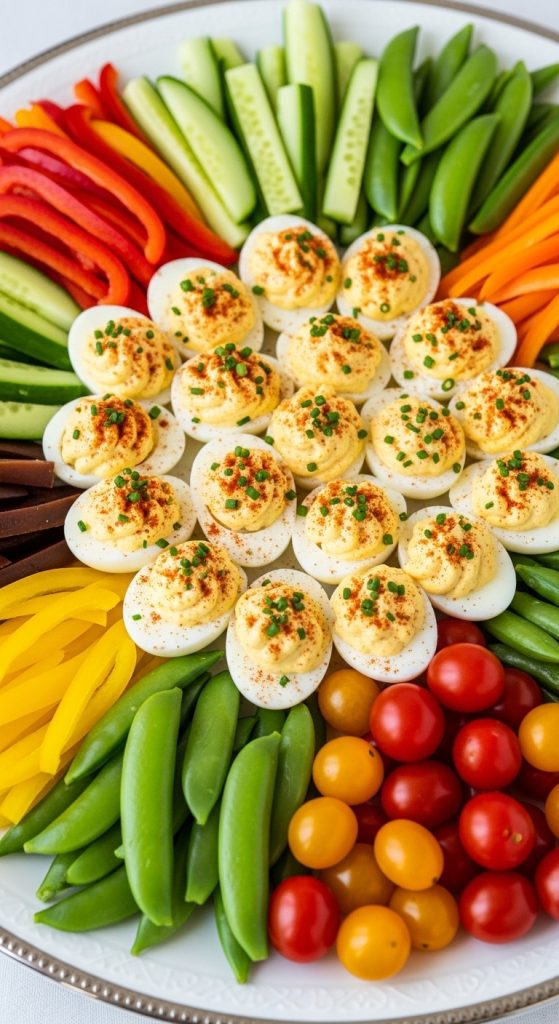
Combine two Easter favorites—deviled eggs and fresh vegetables. Arrange deviled eggs in the center of the tray and surround them with sliced vegetables such as cucumbers, bell peppers, and snap peas. This creates a balanced platter that offers both protein and fresh produce.
7. Cross-Shaped Veggie Tray
For a more symbolic Easter presentation, arrange vegetables in the shape of a cross. Use straight-cut vegetables like celery sticks and cucumber slices to form the outline. Fill the interior with colorful vegetables such as cherry tomatoes, peppers, and carrots. This design is meaningful and elegant for more traditional gatherings.

8. Flower Garden Veggie Tray
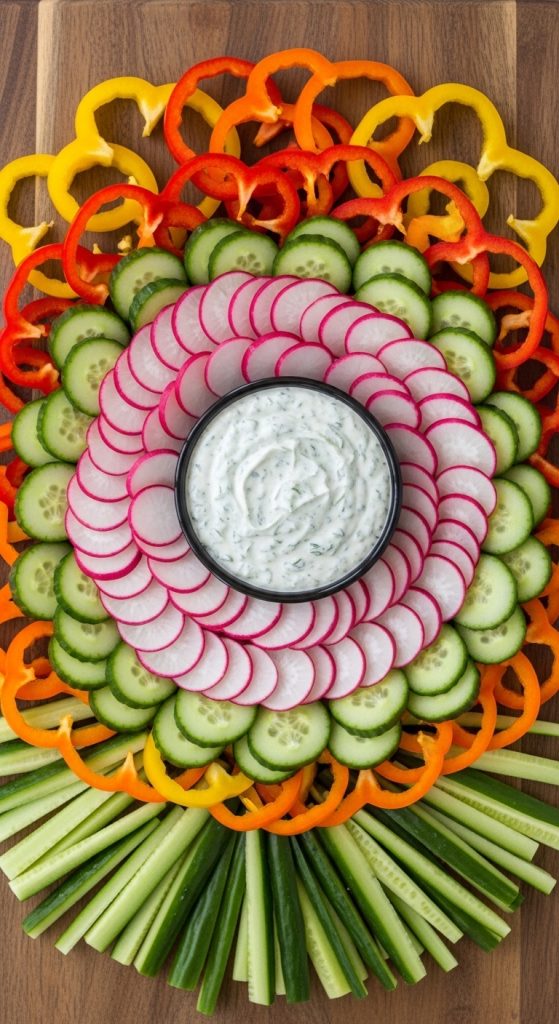
Transform your veggie tray into a floral arrangement. Use sliced vegetables to resemble petals—bell pepper rings, cucumber slices, and radish slices work well. Place a small dip bowl in the center as the “flower center.” Arrange multiple flowers across the tray for a vibrant garden-inspired display.
9. Bunny Face Dip Tray
Instead of shaping vegetables into a bunny, make the dip the bunny’s face. Use a large round bowl filled with hummus or ranch dip. Decorate around it with vegetables arranged as ears, whiskers, and facial features. Carrot sticks can serve as whiskers, while cucumber slices and cherry tomatoes add detail.

10. Tiered Veggie Tray Display
For a more elevated presentation, use a tiered serving stand. Place different vegetables on each level—cruciferous vegetables like broccoli on the top tier, sliced peppers and cucumbers on the middle tier, and carrots and cherry tomatoes on the bottom tier. Add small dips in between levels for convenience and visual appeal.

Tips for Creating the Perfect Easter Veggie Tray
When designing your veggie tray, variety is key. Include a mix of colors, textures, and shapes to make the platter visually appealing. Use fresh, crisp vegetables for the best taste and presentation. Pair your veggies with complementary dips such as ranch, hummus, tzatziki, or yogurt-based dressings. You can also add edible garnishes like herbs (parsley, dill, or cilantro) to enhance both flavor and aesthetics.
Presentation matters just as much as the ingredients. Use large platters, wooden boards, or decorative trays to arrange your vegetables neatly. Group similar colors together or create patterns for a more organized look. If you’re hosting children, incorporating fun shapes and themes can make healthy eating more engaging.