
A wake or memorial gathering is one of the most personal and emotional ways to honor someone who has passed away. It is not just a ceremony—it is a shared space where grief, love, and memory come together. While traditional services have their place, many families today look for more personalized and meaningful ways to celebrate a life lived. Below are ten thoughtful wake memorial ideas that can help create a heartfelt tribute and lasting remembrance.

1. Memory Table with Personal Items
A memory table is one of the simplest yet most powerful memorial ideas. It involves displaying personal belongings that reflect the life, passions, and personality of the deceased. These might include favorite books, photographs, awards, clothing, hobbies, or travel souvenirs.
Guests often find comfort in seeing familiar objects that tell the story of the person they loved. It turns the table into a silent narrative of a life well lived, encouraging reflection and conversation among attendees.

2. Candlelight Vigil
A candlelight vigil brings a peaceful and symbolic atmosphere to a wake. Each guest is given a candle, and together they light them in memory of the deceased. This collective act of illumination symbolizes hope, unity, and remembrance.
It is especially powerful in the evening or outdoors, where the soft glow of candles creates a serene and emotional setting. Some families also invite guests to share a few words while lighting their candle.

3. Memory Wall or Photo Collage
A memory wall allows guests to visually journey through the life of the departed. It can be created using printed photographs, handwritten notes, and small mementos arranged on a board or wall space.
Guests may also be invited to add their own photos or messages during the wake. This interactive tribute often becomes a focal point of the gathering and provides comfort through shared memories.

4. Video Tribute Presentation
A video tribute is a modern and deeply emotional way to honor someone’s life. It can include photos, home videos, favorite music, and messages from family and friends.
Displayed during the wake, it helps everyone reflect on shared experiences and milestones. This type of memorial is especially meaningful for those who may struggle to express emotions verbally.

5. Memory Cards or Message Book
Providing memory cards or a guest book allows attendees to write personal messages, stories, or condolences. These written notes often become cherished keepsakes for the family.
Unlike spoken words, written memories can be revisited later, offering comfort long after the wake has ended. Some families even read these messages aloud during the service.

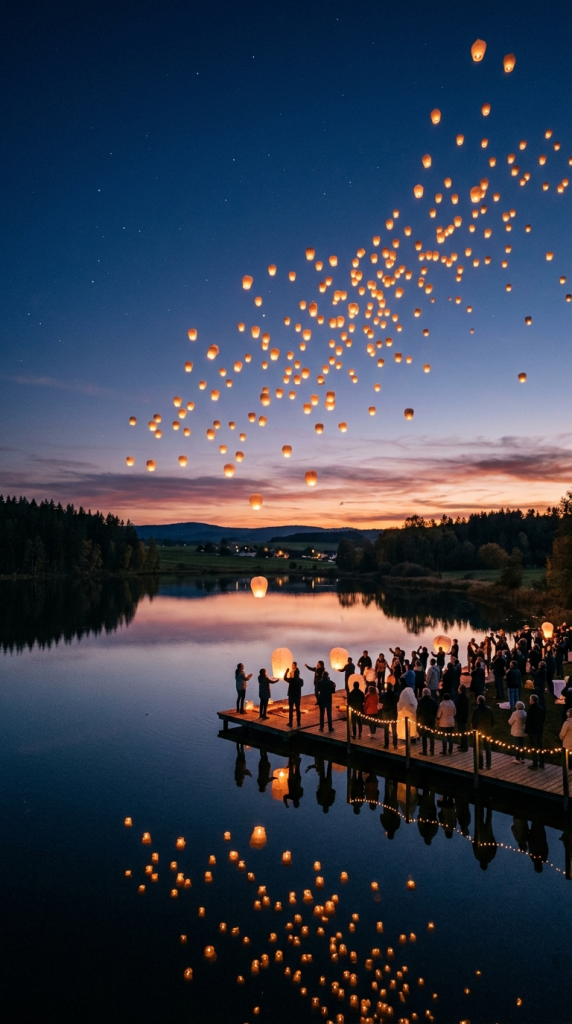
6. Lantern Release Ceremony
A lantern release is a symbolic and visually striking memorial idea. Guests write messages or names on lanterns before releasing them into the sky or water.
This act represents letting go while still holding love in the heart. It is often accompanied by silence or soft music, creating a deeply emotional moment of closure and reflection.
7. Favorite Music Tribute
Music has a powerful connection to memory and emotion. Creating a playlist of the deceased’s favorite songs or live musical performances can set a meaningful tone for the wake.
Family members may also choose songs that reflect different stages of the person’s life. Music helps express feelings that words sometimes cannot.

8. Memory Sharing Circle
A memory-sharing circle invites guests to gather and speak about their favorite stories or experiences with the deceased. This can be structured or informal, depending on the family’s preference.
Hearing personal stories often brings both tears and laughter, reminding everyone of the impact the person had on others’ lives. It also helps build a sense of community during grief.

9. Charity or Legacy Donations
Instead of traditional flowers, families may request donations to a charity or cause that was meaningful to the deceased. This transforms grief into positive action and ensures a lasting legacy.
Whether it is education, healthcare, animal welfare, or community support, such contributions continue the person’s values beyond their lifetime.

10. Tree Planting or Living Memorial
A living memorial, such as planting a tree or garden, represents growth, renewal, and continuity. It provides a physical place where family members can return and reflect.
Over time, the tree or garden becomes a symbol of remembrance that grows and flourishes, just as the memory of the loved one does in the hearts of those left behind.

Creating a Personal and Healing Experience
Each of these wake memorial ideas can be adapted based on cultural traditions, personal beliefs, and family preferences. The most meaningful ceremonies are not necessarily the most elaborate, but the ones that truly reflect the essence of the person being honored.
By incorporating personal touches—stories, objects, music, and shared moments—a wake can become a powerful celebration of life rather than only a moment of sorrow. It helps transform grief into connection, remembrance, and healing.
Ultimately, the goal of any memorial is not just to say goodbye, but to ensure that love and memory continue to live on.